Season Planning With the Swimmer in the Room
Most season plans aren’t short on detail. They’re short on the swimmer, and that’s the one input a spreadsheet can’t give you.

Kelly Reed
Founder, MakoSwim · September 9, 2026 · 8 min read
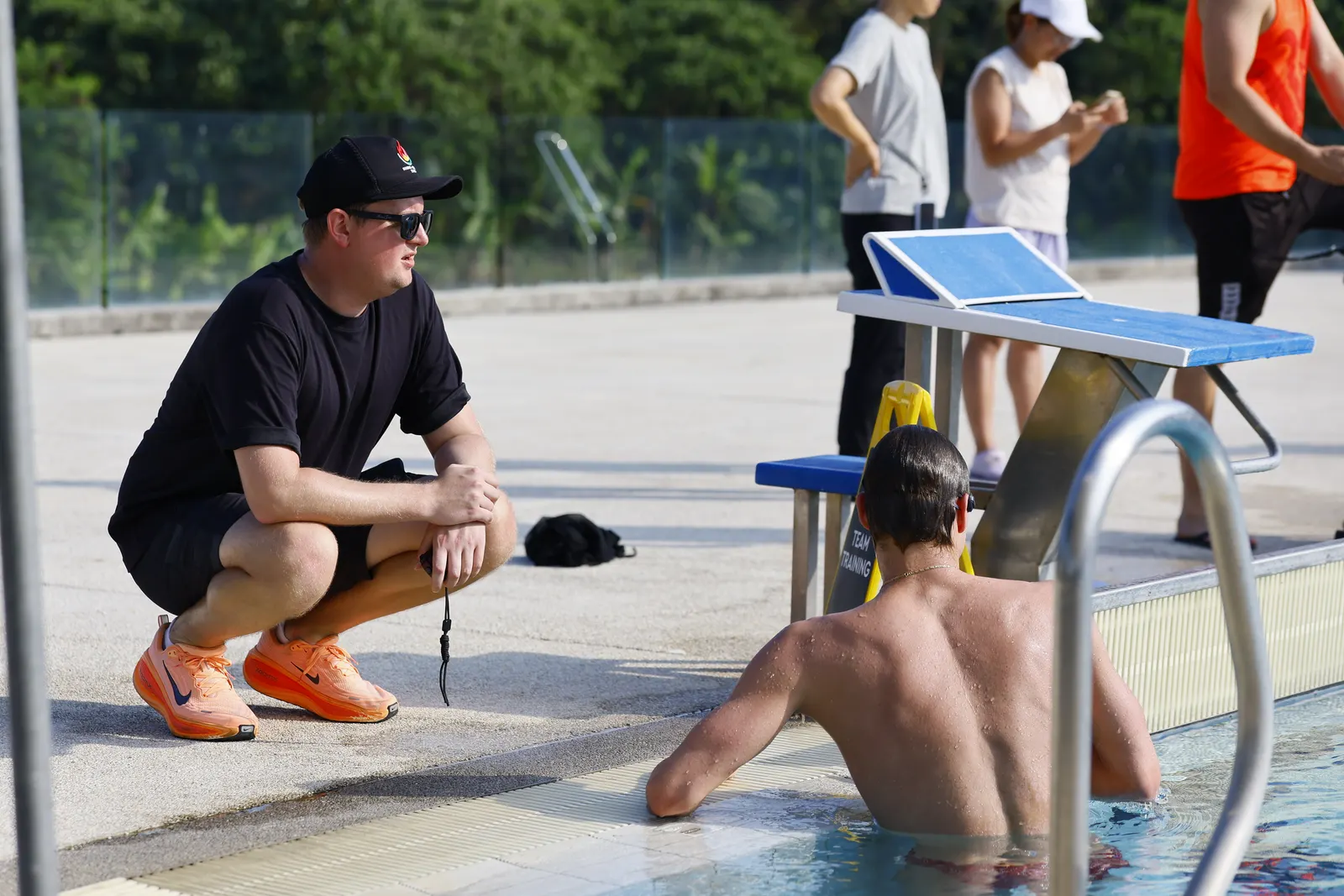
Every coach has written a season plan for a swimmer they were quietly guessing about. You’ve got the times, the meet calendar, last year’s volumes and a decent instinct for what this one needs. What you haven’t got, unless you asked, is what they think the season is for.
That gap is easy to miss, because the plan looks finished without it. It has phases and targets and a taper, and none of those need the swimmer’s opinion to sit on a page. The trouble starts in about week nine, when the work stops feeling like it belongs to them.
Coaches already treat the plan as a living thing. In one survey of national-level swim coaches, nearly nine in ten said they adjust the next session after comparing what they planned against what actually happened. Only one in nine had involved a swimmer in building the plan in the first place. So the document gets revised constantly, against data, by people who clearly don’t think it’s sacred. It just gets revised without the person it describes.
You already disagree about Tuesday
Here’s the part that surprised me. When researchers pooled studies comparing the training load coaches intended against the load athletes reported, the two lined up pretty well overall. Split it by session type, though, and one day comes apart: the easy one. On sessions the coach designed as recovery, swimmers consistently reported working harder than the coach thought they had.
Swimming has its own version. Across twenty sessions with a squad of twelve, swimmers reported working harder than intended on the easy days and easier than intended on the hard ones. The authors called it a lack of communication between athletes and coach, which is a polite way of saying the plan and the pool had stopped matching.
The recovery day is the day you and your swimmers are describing two different sessions. If that’s true on a Tuesday, it’s true across twenty weeks.
Asking is not the same as handing over the stopwatch
The obvious move, letting swimmers set their own goals, isn’t actually what the research supports. When you hold goal difficulty steady, athletes given a goal and athletes who chose one perform about the same. There’s no good evidence that setting goals together beats assigning them, and none that it loses either.
What does show up is more useful to a coach, and it’s two things.
The first: a goal handed over tersely, do this, with no reason attached, performs significantly worse than one the athlete helped set. The explanation is the active ingredient, not the ownership. The second is sharper still. When researchers separated helping choose the goal from helping build the strategy, choosing the goal changed nothing measurable, while working out the how together produced better performance and more belief they could do it.
So the pre-season conversation isn’t really about who picks the target time. It’s about if your swimmer knows why that number is the number, and if they had a hand in working out how to get there. Both of those are things you can only find out by asking.
The tier most goal sheets never reach
Ask a fifteen-year-old what they want this season and you’ll get the same kind of answer every time. Make finals at state. Go a best time at champs. Those are outcome goals, and across the sport literature they’re the tier with the weakest evidence behind them, and the least a swimmer can do anything about on a wet Wednesday.
The strongest effects sit one floor down, on process goals: what a swimmer does with their hands and their walls and their mornings. Performance goals, the target times, land in between. Long-term goals sitting on their own, with nothing underneath, do close to nothing.
Worth saying that most of that research ran in labs, on students at darts and bowling rather than on swimmers in January, so take the ordering and leave the decimals. But the ordering matches what most of us have already watched happen. The swimmer who commits to holding their stroke count under fatigue on Tuesdays and Thursdays improves. The one who writes “make finals” on a form in September and never looks at it again does not.
What to actually ask them
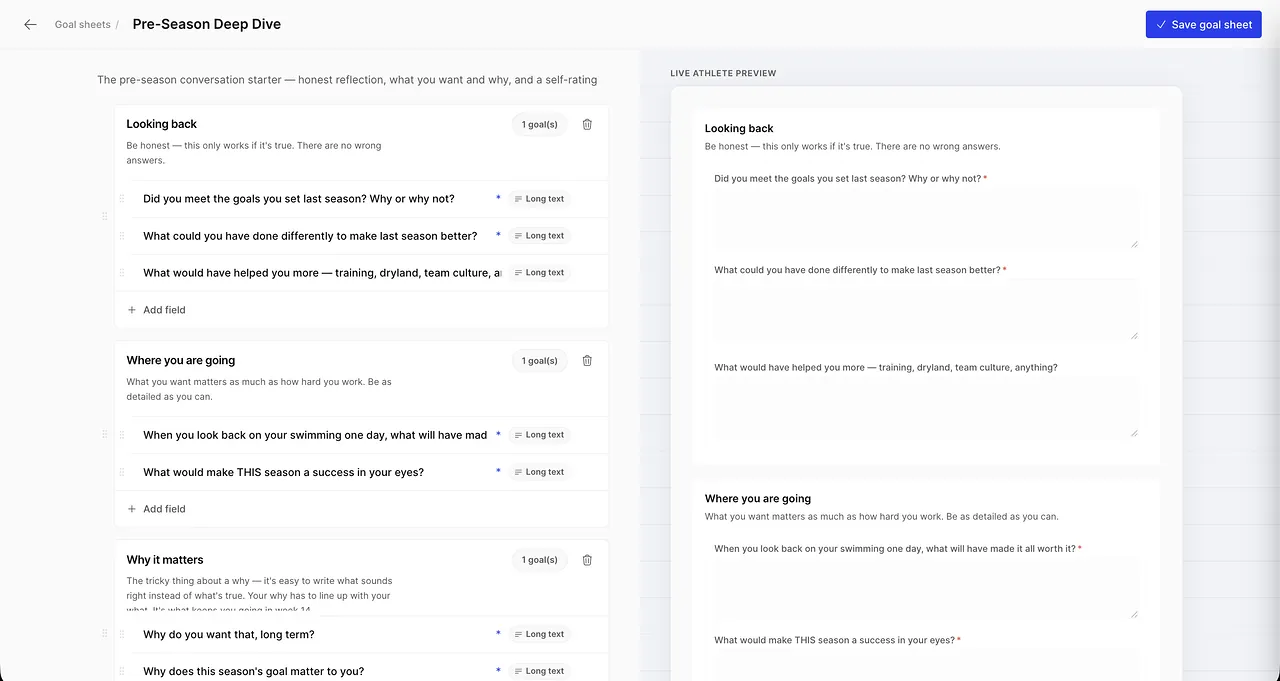
The conversation matters more than the form it arrives on, and it doesn’t need to be long. Twenty minutes a swimmer, in the quiet week before everyone comes back, is enough. These are the questions doing the work in our own pre-season goal sheet:
- Did you meet the goals you set last season, and why or why not? Starts them reflecting rather than wishing, and tells you what they think went wrong before you tell them.
- What could you have done differently to make last season better? The answers are usually more honest than anything you would get by asking what you could have done differently, and you often learn that anyway.
- What would have helped you more: training, dryland, team culture, anything? Leaves the door open to the answer you were not expecting, which is generally the one worth having.
- What would make this season a success in your eyes? Their definition, not the one on your spreadsheet. If those two are different, you want to know in September and not in March.
- Why does that matter to you? The rationale question, and the one the research says is doing the heavy work. It is also the one swimmers find hardest, so give them room.
- What are you going to do every week to get there? The process tier, and the one worth pushing on until the answer is specific enough to check on a Tuesday.
You’ll get some thin answers the first time. That’s normal, and it’s still more than you had. The swimmers who write two lines in September tend to write six the following year, once they’ve seen that someone read the first two.
A goal nobody answers is a form
Which is the part it’s easiest to get wrong. Goal setting works where athletes get told how they’re tracking, and fades where they don’t, and swimmers know quickly which kind of programme they’re in.
There’s a study I keep coming back to on this. Researchers interviewed thirty people across twenty sports programmes at a national institute, and the single biggest theme in everything they collected was feedback. Half the athletes they spoke to admitted they’d written something less than honest on a form at some point, because they didn’t want to look unprofessional or short on motivation. One of the staff put the mechanism plainly: if they think that no-one’s looking at it, they’ll just give dummy responses.
So read the sheet, write back, and let them see you did. None of that is glamorous, and it’s most of the value.
The second they fill out their goal sheet, it all changes. It’s no longer my goals for them, it’s their own. And this is where the coaching part gets good. I can see what they wrote down, I can see what they want to do to get faster, and I can deliver feedback to let them know how I can help them.
What it looks like from lane four
The other half of this is what your swimmer can see. A season plan living in your laptop can’t explain itself to anybody, and a swimmer who filled in a goal sheet in September has no way of knowing whether it changed a single thing you wrote.
When the season plan is somewhere they can open it, that stops being a mystery. They can see the phase they’re in, what this week is supposed to do, and how the session they just swam compared to the one you planned.
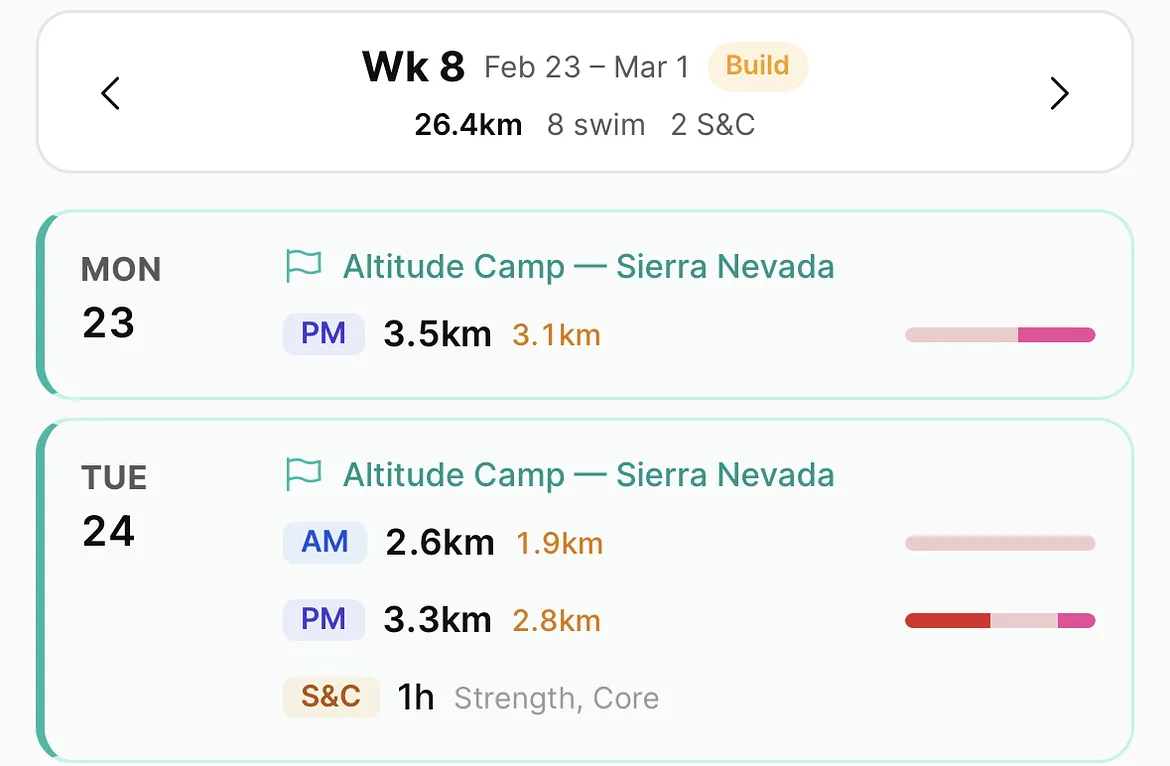
I can see the whole season plan and see exactly where we’re building to. Today’s workout right there. Every set, every rep. And I can even set my own goals, and my coach goes and reviews them.
Mark and Lachlan are describing one loop from its two ends. The coach sees what the swimmer wrote; the swimmer sees the plan their answer fed into. That loop is the whole thing, and it closes or it doesn’t.
What it won’t do
Being straight about this: planning with your swimmers won’t make them faster on its own. The biggest review of coach autonomy support, covering close to 39,000 athletes, ties it strongly to motivation and engagement and to lower burnout, and only weakly to performance. In the one study that followed swimmers into a second season, it predicted how much they enjoyed the sport but didn’t separate who came back from who quit.
Which is roughly what you’d expect, and it’s still worth doing. A swimmer who knows why they’re doing week nine trains week nine properly. A swimmer who told you in September what they wanted is a swimmer you can go back to in March when it gets hard. You’re not buying a time drop. You’re buying a season where you and your swimmer are working from the same picture, and where the plan stops being a document you maintain alone.
None of this is really about better data. It’s about seeing the whole picture: what you planned, what actually happened, and what your swimmer wanted out of it, all in one place. Coaching gets easier when you can see all three at once, and most of the guessing just stops.
Data sources
- Cano-Cuartero and colleagues (2025), Frontiers in Sports and Active Living. Survey of 18 Spanish national-level swim coaches, so a description of practice rather than a measurement of the sport.
- Thomas, Mujika and Busso (2008), Journal of Sports Sciences. Taper optima modelled from two seasons of training data for eight elite swimmers.
- Hellard and colleagues (2019), Frontiers in Physiology. 127 elite swimmers across 20 seasons.
- Kiely (2018), Sports Medicine. The periodization critique. Labelled a current opinion by the journal, not an experiment.
- Inoue and colleagues (2022), Sports Medicine Open. Coach and athlete load perception, 29 studies and 725 athletes across 18 sports.
- Wallace, Coutts, Bell, Simpson and Slattery (2008), Strength and Conditioning Journal. The swimming numbers: 12 swimmers across 20 sessions. Reports the authors’ own earlier experiment.
- Williamson and colleagues (2024), International Review of Sport and Exercise Psychology. Goal-setting effect sizes, 27 studies. Mostly laboratory work with students and novices rather than squads.
- Locke and Latham (2002), American Psychologist, page 707. The participation finding. Run in workplaces, so it reaches a pool deck by argument rather than by evidence.
- Saw, Main and Gastin (2015), Journal of Sports Science and Medicine. Self-report honesty. 30 interviewees across 20 sports, 8 of them athletes.
- Saw, Main, Robertson and Gastin (2017), Sports. The monitoring trade-off, 335 athletes over 16 weeks. Observational.
- Mossman and colleagues (2022), International Review of Sport and Exercise Psychology. Autonomy support, nearly 39,000 athletes. Correlational throughout.
- Larson and colleagues (2020), Current Issues in Sport Science. 265 youth swimmers followed into a second season.
Explore MakoSwim
Keep reading
How the 1500 Freestyle World Record Was Broken
Johannes Liebmann took 3.88 seconds off Bobby Finke’s 1500 freestyle world record while turning his arms over almost 8% slower. I measured every length of it.
Why Swimmers Plateau, and How Data Actually Breaks It
Most plateaus aren't a fitness problem. They're a visibility problem, and that's exactly what tracked data fixes.
Your Coaching Data Shouldn't Live in Ten Places
How bringing every datapoint into one connected core helps coaches make sharper decisions, and spend more time on deck.
Coach with connected data
Workouts, video, wellness and analytics in one platform.